Fishing for tench
At last, the short days of winter are slowly receding and the promise of spring is in the air. Along the hedgerows snow drops and crocuses abound and if they could speak would surely be saying, “Things are on the up guys, all is well”. And although it may be a little early yet, it will soon be time for many anglers to turn their thoughts to a visit from the doctor.
“What is this?” I hear you cry. “What is the buffoon talking about? I don’t need to see a doctor, I’m hail and hearty and sound in wind and limb.” But as those in the know, know, it is not not our local GP to which I refer, but a fish thought for many years to have healing properties which benefited other fish, particularly pike. It was once thought that when a pike got sick it would seek out the company of a tench and would then proceed to rub itself against the flanks of its no doubt terrified companion.
The idea being that the curative powers contained within the slime of the tench would transfer onto the sick fish thus healing itself of whatever malady it was afflicted with. It was also said that once cured, the pike would not then devour said tench regardless of how hungry the pike may be or how tasty a dinner the tench might look.
Nowadays of course we live in more enlightened times and are won’t to dismiss such tales as childish nonsense passed down through generations of simple country folk who still gasp when the street lights come on. And while it may be more factually accurate in this modern age of enlightened non-believers to laugh and pour scorn on such archaic notions, it is also true to say that a closed mind is no where near as much fun.
Identification
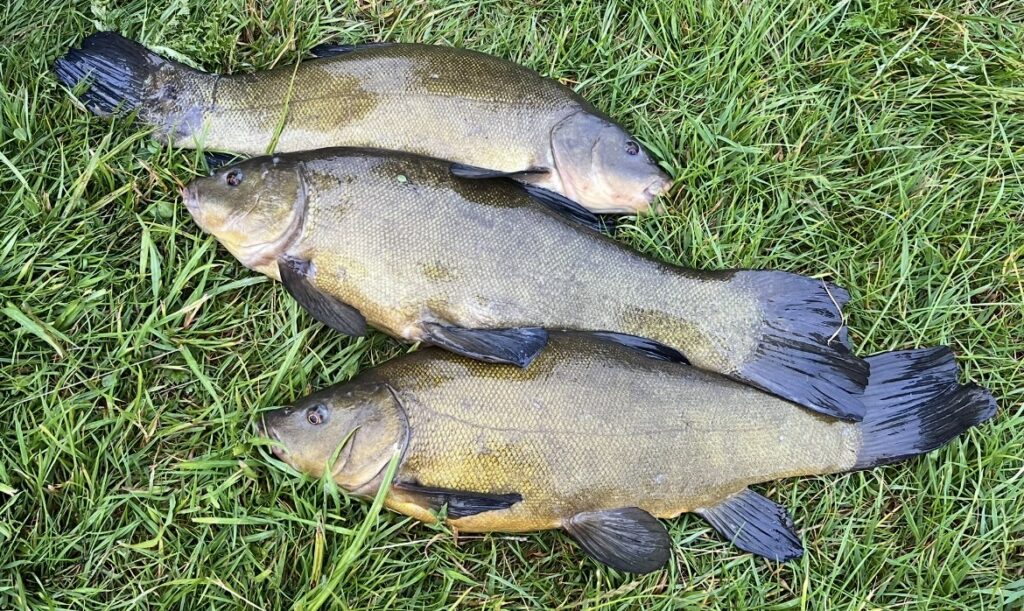
The tench (tinca tinca) is for many, the fish of summer. It is a glorious fish with red eyes and a thick set body bound in a dark olive green livery consisting of tiny scales which render it smooth to touch. In appearance it is unlike any other fish and is easily identifiable. Roach are often mistaken for rudd. Gudgeon are sometimes mistaken for small barbel, but the tench stands alone.
The drab colouration of the tench can give us some clue as to its preferred habitat and general life style. The colour provides superb camouflage for what is in essence a shy retiring fish who prefers to live its life amongst the aquatic plant life in sometimes semi stagnant water.
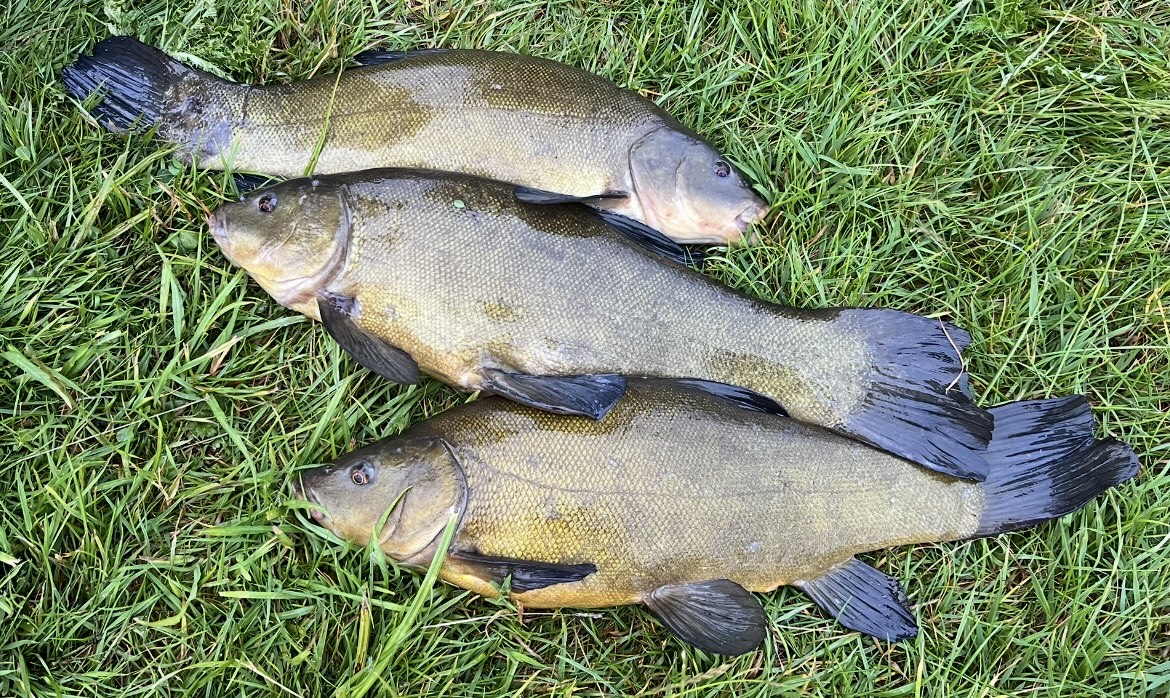
Tench are powerful muscular fish, equipped with huge fins, particularly the tail fin, which is large and square, resembling as it does a decorators paint brush. Anglers will feel the effects of this power whenever a tench is hooked, because although generally lethargic and sluggish by nature, they are anything but once they’ve taken the bait and any angler’s heart will be set to ‘all of a flutter’ before the fish is safely in the net.
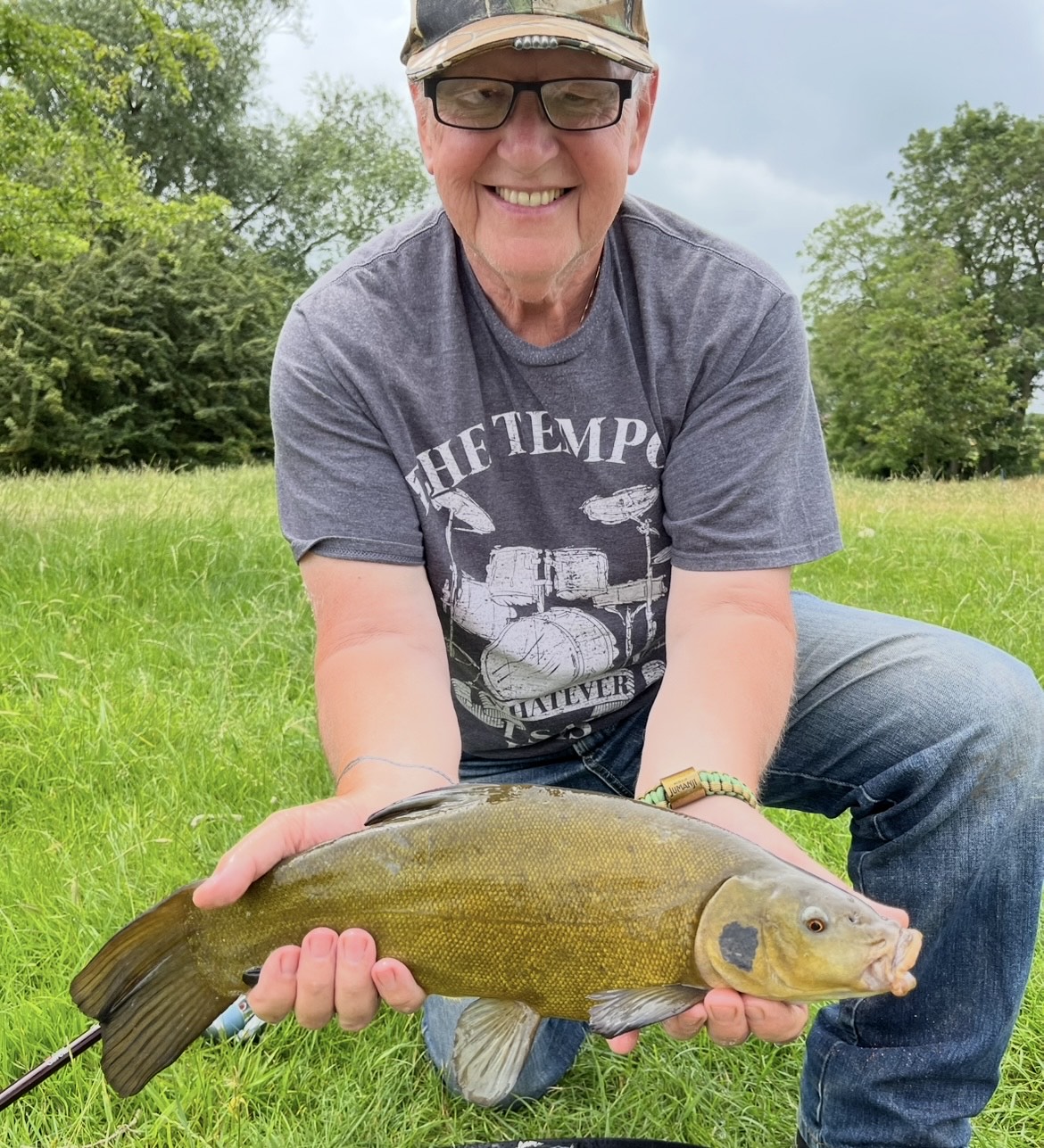
Tench can grow to a length of up to 70cms and have a lifespan of 12 to 15 years. Although the average size for tench in Britain is around 2lbs to 4lbs, (a fish of 7lb or over is considered a specimen fish) given suitable conditions tench do grow to sizeable proportions and I believe at the time of writing the current UK record is a proper heavyweight weighing in at 15lb 3ozs, which, incidentally is almost three times the size of my PB of 5lb 8ozs.
Distribution of Tench
Although tench are pretty much widespread throughout England but less so in Wales and Scotland, it is still a fact that for some reason finding a good tench water seems to be getting more and more difficult these days.
Many years ago I fished a pool in Warwickshire that was no more than half an acre, but was stuffed with tench. During the warmer months this pool would often get totally covered in duckweed, giving it the appearance of a huge odd shaped billiard table. Armed with maggots and sweetcorn, my mates and I would use half ounce leads flicked into the air so that they dropped through the surface covering. Once the bait was settled on the bottom it was simply a case of sitting back and watching the rod tip. We had some cracking mornings on this pool.
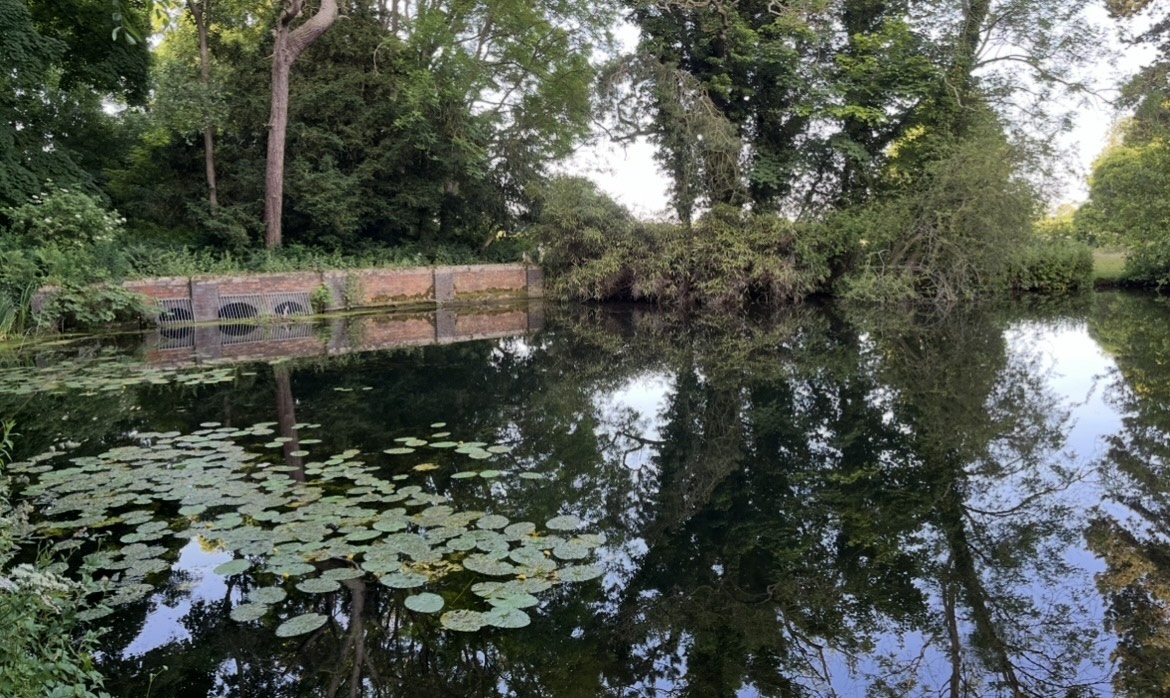
For me one of the joys of tench fishing is that it often takes me to seemingly forgotten and secluded waters. The sort of places that Mr Crabtree would wax lyrically about. Deep mysterious pools fringed with overhanging willows that tickle the shimmering surface between patches of lily pads. These often hard to find places are much beloved by tench and tench angler alike.
Location – where to find Tench
Tench are lovers of still waters, gravel pits, lakes and meres and are generally not happy in rivers, particularly fast flowing ones. That said, they can be found in quieter backwaters and slow moving rivers like the Norfolk Broads. They are also found in fenland drains and are well distributed throughout our canal system. Finding tench in canals can be very difficult as these long snake like stretches of water are often featureless. Obviously if there are lily beds present they are always worth a try. Otherwise local knowledge in the form of tackle shops or angling clubs may be the answer.
It may seem something of a cliché these days, but, if I want to find a good tench spot, the first thing I look for is an abundance of aquatic plant life. Two areas well worth investigation are patches of amphibious bistort and of course a good bed of lilies. Tench love the cover of both of the above. It is here that they find food and sanctuary from predators. However. it may be that you fancy a spot of tench fishing earlier in the year before the lilies are showing. If this is the case, shallow water warms up more quickly than deep water so during a mild spell of weather it’s worth trying the shallower areas of around four or five feet first in case fish are enjoying a spot of warmer water after the winter cold.
Low light
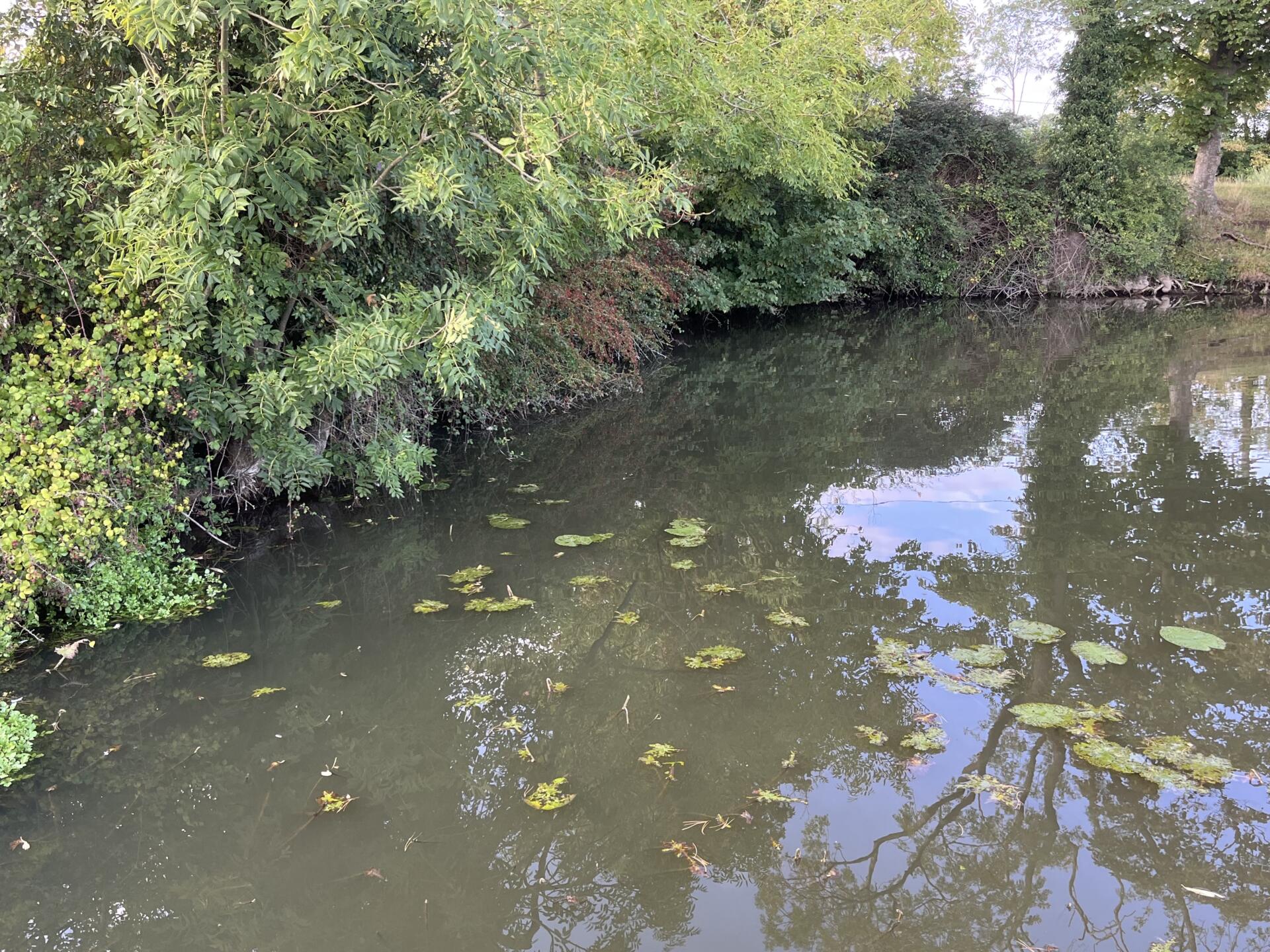
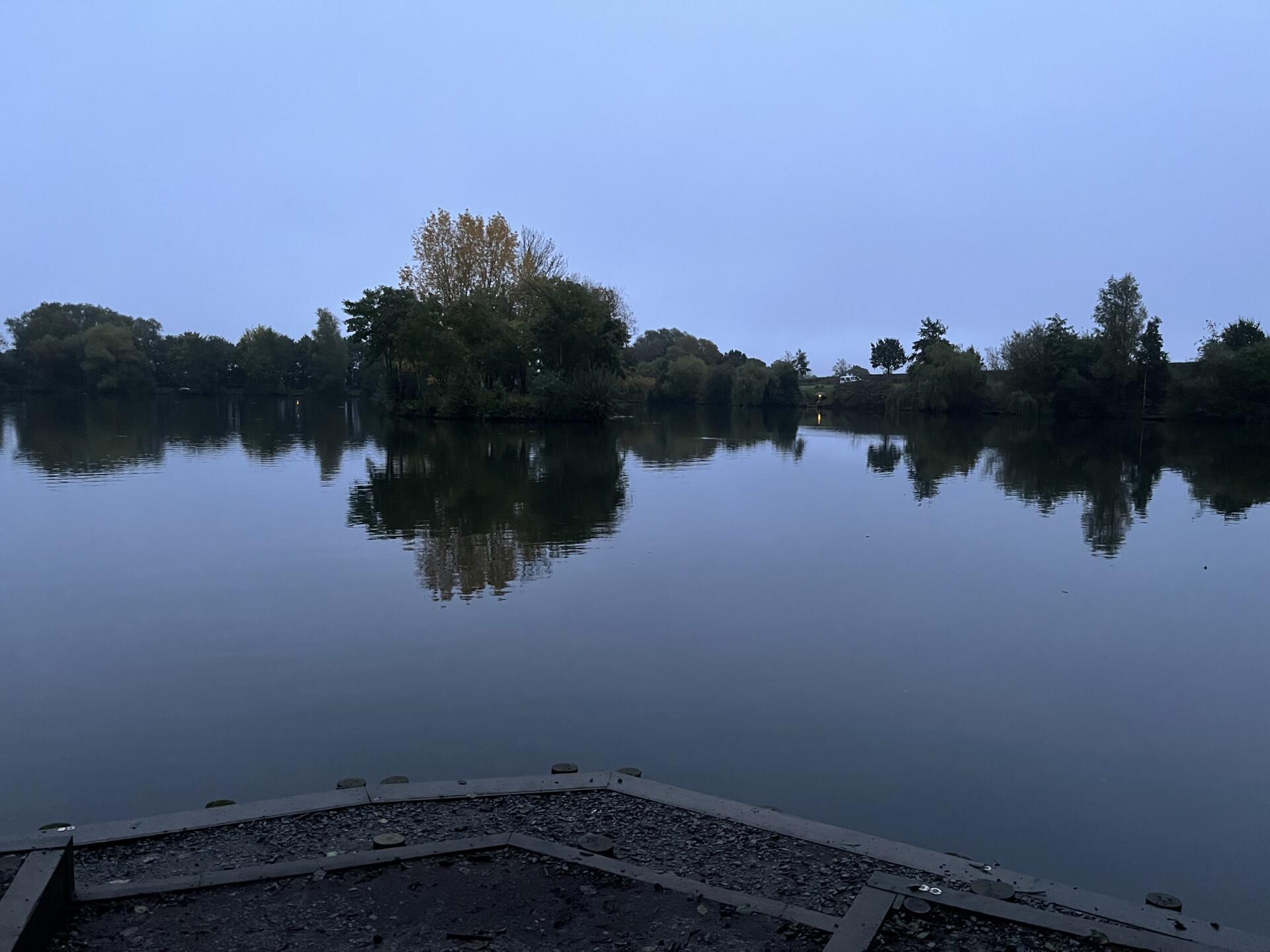
During the warmer months of spring and summer, early morning or late evening are the most likely times to find them on the feed, although during overcast weather they can be caught throughout the day. Given the fact that tench seem happiest when feeding in low light it would suggest that fishing through the hours of darkness would be the most profitable.
Now, I have never fished for tench throughout the night, but I have done a lot of around the clock carp fishing and on the several occasions I have ‘accidentally’ hooked a tench whilst carp fishing it has always been in the morning during or after first light. I have never caught a tench at night and would not intentionally fish for them through the small hours. And yet many other anglers do and with good results so I suppose this simply highlights one of the many joys of angling and that is its unpredictability.
So, whether your preference is day or night, one area that’s always worth exploring is the margins. Tench love to patrol the margins, particularly if the banks hold plenty of vegetation in the form of overhanging shrubs or bushes. These areas provide cover and are always a good bet for finding tench.
Bubbles
Unlike carp, which feed at any level of water, tench are almost exclusively bottom feeders as they love to grub about in the silt stirring up blood worm and caddis larvae. An excellent way to locate feeding tench is to look for patches of small bubbles breaking the surface. Although not exclusive to tench, as carp and bream often produce bubbles when feeding, tench bubbles are often seen as small and numerous and seem to make the surface water fizz.
I think the jury is still undecided as to whether these bubbles are produced from tench nosing about in the silt or from the fish themselves releasing bubbles through their gills. The fact that the bubbles are usually smaller than those produced by other fish would suggest that it is indeed the tench themselves that produce them. But, whatever the reason, a bait dropped close to or in amongst these bubbles will often result in a hooped over rod.
Raking
If faced with a heavily weeded water where presenting a bait would prove difficult, one method that has been used for years and still works today is raking out a swim. Take a couple of garden rakes and remove the heads from the handles. Attach the heads back to back using cable ties and then fasten them to a length or rope of around ten to twenty metres. Hold the end of the rope and taking careful aim and swing the rake head out into the water. Retrieve the rake now heavily covered in weed. Repeat this several times until you have a cleared the swim sufficiently and start fishing.
Although the disturbance may seem considerable, the tench will soon return to explore the now exposed lake bed in search of a tasty morsel or two.
Tactics
Tench are excellent fighters, so it’s no use going after them with 2lb line with a pound and a half bottom. As with all my fishing I find the simple approach is almost always the most effective, so when float fishing for tench I would opt for a twelve or thirteen foot float rod and reel set up with 5lb mainline with a hook link no lighter than 4lb. If fishing a weedy swim (and let’s face it, they’re the most likely places to find tench) it would be better to increase the strength of line to try to avoid lost fish.
As tench feed on the bottom, standard float fishing, feeder or legering methods will produce results. Try to present your bait close to the weed bed if possible and a waggler fished a couple of inches over depth is often a good way to tempt a wary fish if bites are difficult to come by.

Gravel pits
Gravel pits generally make excellent tench venues as they often provide ideal conditions for tench to thrive. In smaller waters where carp are also present, tench can be out muscled when it comes to filling their bellies on a limited food supply, whereas gravel pits by nature of their size offer a greater amount of natural food over a bigger area and so with less competition often produce some spectacular tench.
Due to their size, gravel pits can be a little daunting for the newcomer, so it pays to arrive in plenty of time (preferably the day before) to have a walk around. Look for weedy areas and if the water is clear as they often are, seek out weedy areas adjacent to gravel bars as these are always worth trying, Also with the prevailing wind in the UK being a south westerly, the north eastern shore of a big expanse of water is often worth checking out due to warmer water and more food.
When fishing at distance an open ended cage feeder stuffed with groundbait and free offerings of hook bait will often bring fish to the net, as would using “the method”. The hook size should reflect the size of bait being used. I tend to use anything from a sixteen up to a ten.
Baits
As for the baits themselves, tench enjoy a wide and varied pallet with maggots, casters and worms being amongst the favourites on the menu. Sometimes, like us, things on the standard menu may seem a little boring, so we cast our eyes to the specials board. Bread, pellets, sweetcorn, luncheon meat and boilies will also produce results, so take a varied selection of goodies with you and if one bait isn’t producing be prepared to ring the changes. Hemp is also a favourite and when added to a light groundbait can be a good way of keeping the fish interested without over feeding.
Little and often
When fishing in the late winter early spring months remember that tench may be only just waking up so huge handfuls of bait are not required at this time. The much used little and often approach being much more likely to produce results.
Summary
So, let’s reflect. Tench are by nature pretty laid back when it comes to the necessities of life. They’re not interested in the fast lane like the barbel and chub, much preferring to hang out with a few mates under a canopy of lilies or similar vegetation in some quiet little pool or pit, where they can pass the time grubbing about for a tasty crustacean or two.
In general they are most active in the months of April through to September and the best times to catch them are the first few hours after first light and the hours around dusk. They will take a wide range of baits and when caught on balanced tackle always give a good account of themselves.
So, if in the warmer months to come, you’re looking to spend some quality time in the great outdoors enjoying all the joys of nature, pick a morning and set the alarm for silly o’clock and go take yourself to a quiet little pool half covered with lily pads and have a few hours tench fishing. You’ll be glad you did.
Tight Lines.

Similar articles

Top Tips for Successful Autumn Fishing
With cooler climes and falling leaves, autumn is a time of transition for fish and fisheries. It’s also a time of huge opportunity for the switched on angler! Fishing author and South West guide Dom Garnett has some top seasonal…
Autumn Fishing
Autumn is a glorious time to be by the water, offering a chance to catch that specimen fish and maybe even set a new PB. Autumn offers supreme all round fishing and is possibly the best season of all in…
Why I’m buying a mile of Loch Ness (and how you can beat me to it)
There is a precise moment, just as the early morning mist peels off the pitch-black surface of Loch Ness, when every angler’s heart does a little syncopated skip.
Make the most of the 2026 river season with this in-depth guide to fishing rivers
If you’re new to fishing rivers, or just fancy a change from fishing stillwaters, this guide will help you make the most of the new 2026 river fishing season. With advice on reading the water, what species to fish for…
Success at The Nyth: 10lb springer proves Wye salmon are still biting
Wye Salmon – 10lb springer at The Nyth & Tyr Celyn Fishery Lodge on May 8th! Read the new owner’s success story and secure one of the final 2 shares.
Our guide to fishing this spring 2026
With the worst of the weather over (we hope!) and with spring finally here, it’s time to clean out that tackle box and get on the bank for some spring time fishing.
Exciting updates from The Folly Lakes: Getting ready for a record-breaking summer
The Folly Lakes in Cambridgeshire is widely regarded as one of the most prestigious big-carp venues in the UK. Known for its seclusion and its incredible stock of original fish, including specimens reaching over 50lb, it has long been a…
Chasing Whiskers: Top 14 Barbel Venues
There is nothing quite like the “three-foot twitch” of a barbel. It’s a drug for the river angler. The sudden, violent bend in the rod that signals a battle with the hardest-fighting fish in our freshwater. Whether you’re a seasoned…
Chasing Giants: A Guide to Catching a 50lb Carp in the UK
For many catching a 50lb UK carp is a lifetime achievement. This guide highlights the venues, elite tactics, and the expert mindset required to land these wary, record-breaking giants in British waters.Search by Region or County
Find new places to go fishing in your local area or county by choosing your destination below





Comments