![]() |
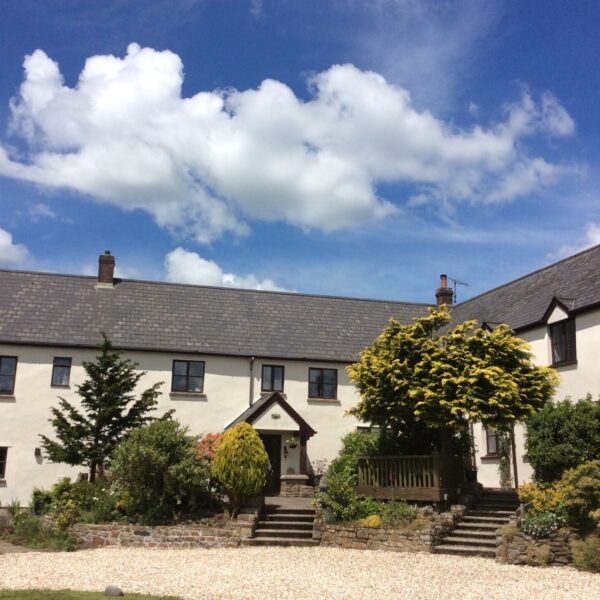
Ian Heaps Premier Fisheryand School of Angling Holgan Farm Llawhaden Narberth Pembrokeshire SA67 8DJ Tel: 07796 517586 (mobile) E-mail: heapsfish@live.co.uk Former World Coarse Fishing Champion Ian Heaps - who took the title in Poland in 1975, became European Champion in Portugal in 1985 and was a member of the England team from 1975 to 1988 - realised another lifetime's ambition when he opened his three lake fishery next to the Eastern Cleddau river in Pembrokeshire.
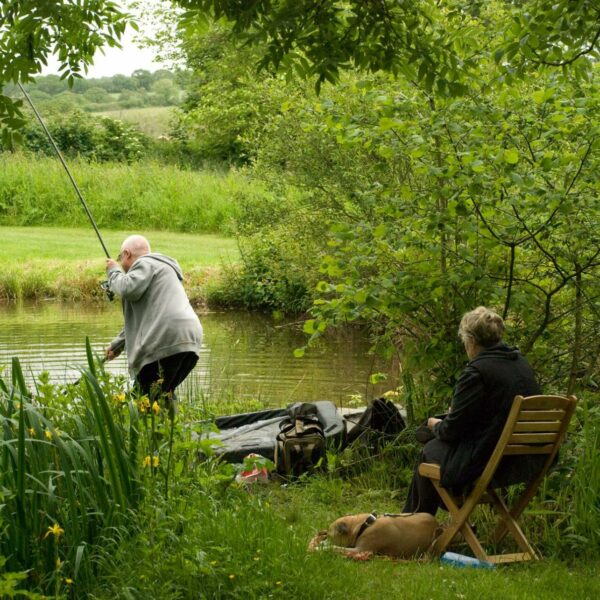
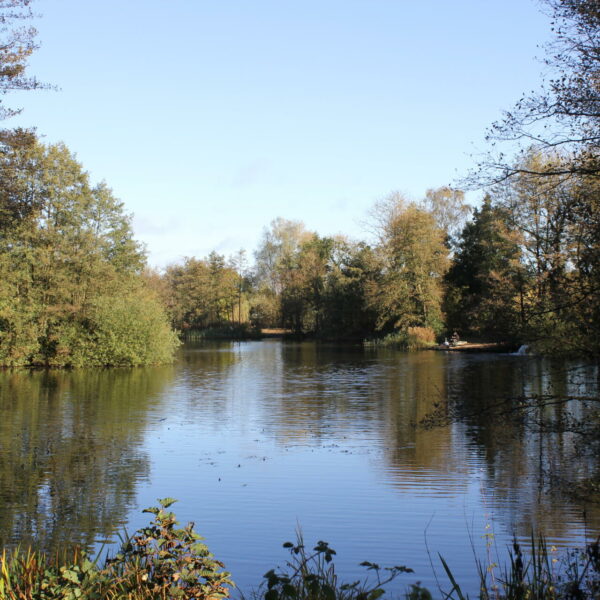
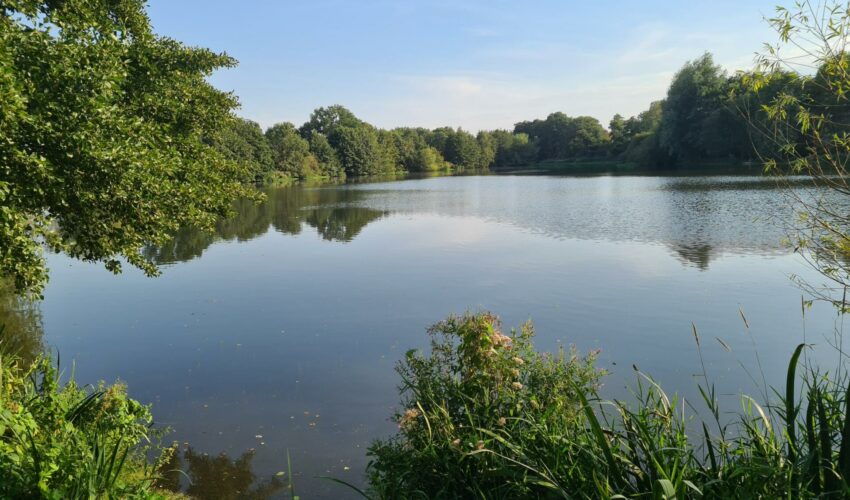
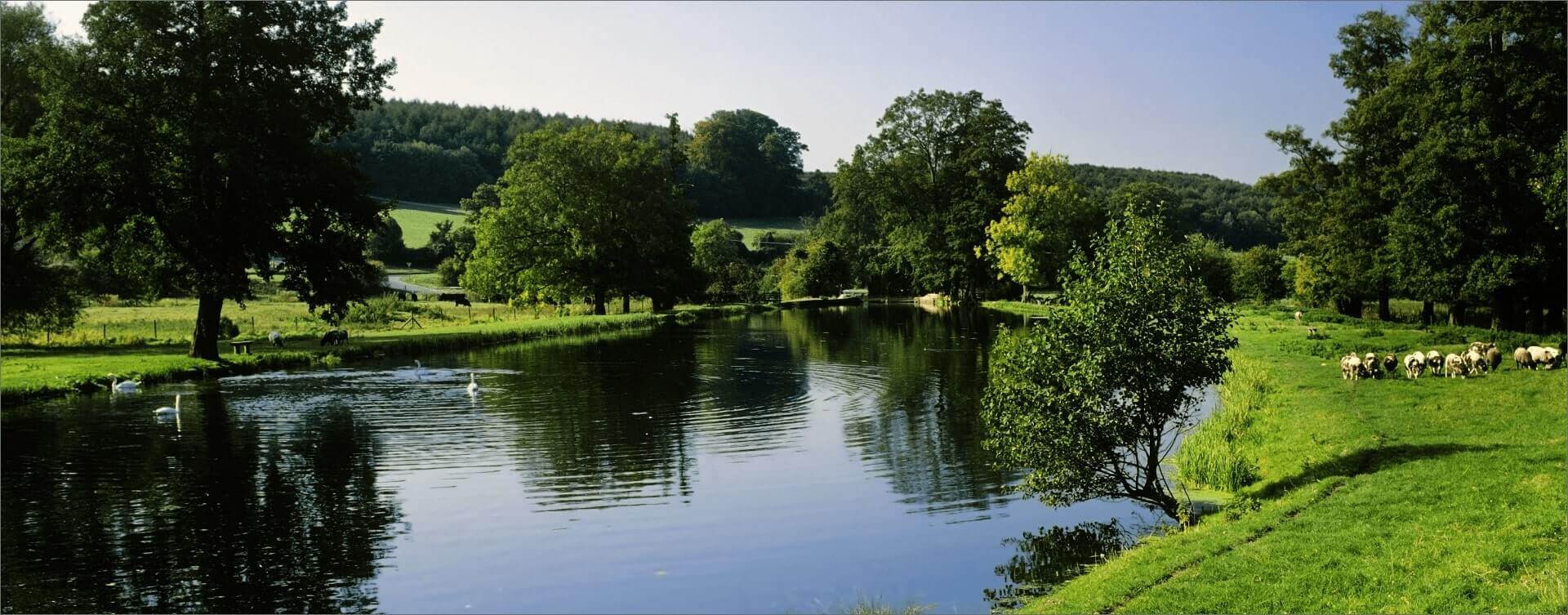
Indeed, Holgan Farm must now rank as one of the most attractive fisheries in the UK - a first-class angling venue in beautiful Welsh countryside which fishes well all year round because of the temperate climate where snow and ice are something of a rarety.
Not only is this a great way for beginners to the sport to learn the correct ways to go about fishing and how to read the water, but his courses are also invaluable to more experienced anglers who can learn what they do wrong, get rid of bad habits and learn new and different techniques.
The fishery is set on a 12 acre site which has been extensively landscaped and planted with thousands of flowers, shrubs and trees.
Suitable for disabled anglers, the fishery has a roadway all around the site and three car parks, one to serve each lake. In addition, there are purpose-built disabled pegs on all waters. To prevent the spread of disease, Ian supplies every angler with one of the fishery's own landing nets whilst those who are new to the sport can hire the right tackle for the job by the day. Although Ian enforces the minimum number of what he describes as 'sensible' rules, he does not allow boilies.
Each lake is just over two acres in size and hold 30 pegs. With an on-site tackle shop, ladies and gents toilets and picnic areas equipped with picnic tabled scattered round the site, Ian Heaps Fishery is suitable for all the family.
For those who like match angling, Ian holds a 'Golden Peg' Open Match every Sunday on the Carp Lake. Entry is £20 'all-in' with cash prizes going to the top four places. About 15 anglers usually enter every week.
|
Carp Lake
Holding Mirror and Common carp averaging 8lbs plus a good head of doubles - the largest recorded at 27lbs 14oz - Carp Lake also offers a good many green and golden tench to 5lbs as well as Crucian Carp to 3lbs 8oz with the average being about 1lb 8oz. Ian purposely keeps roach out of this water because he says lakes can quickly become overrun with immature fish which can become a nuisance to anglers. With an average depth of about six feet just a rod length out and three feet in the well fringed margins which have been heavily planted with irises which provide lush cover in the summer, Carp Lake has three islands which provide features to fish to, although in summer fishing close to the margins normally produces the best results.
During the summer months when the bankside plants can be up to five feet high providing plenty of cover, then the dibber float fished tight to the margins sorts out the bigger fish. Best baits for this are usually corn, maggots, meat and paste fished over a bed of pellets which are sold on site. To make the paste, simply add an equal amount of water to the pellets and mix into a soft paste which can be used as large as a conker. The carp just love a very soft paste and an easy way to fish this is under a small pole float with no shot on the line using the paste as a plummet and adjusting the float so just the tip shows. If the paste is removed the float will lie flat, if it is taken by a fish the float just goes!
In the later months the fish often leave the margins and then the pole scores highly, unless you want to fish towards the islands when a waggler is required to cover the distance. Once again, paste works well when fished over a bed of pellets and this is probably the No 1 method in the colder months. In addition, casters, maggots and all flavours of sweetcorn work exceptionally well.
In winter when the water is clearest the fish often shy to the islands. When this happens it pays to use a large waggler baited with hair-rigged sweetcorn. It was using this method in the winter of 2003 that Rob Jones from Neath took the lake record during a match with 187lbs 14oz after hair-rigging treble sweetcorn and fishing just two feet deep close to the island.
Tench and Crucian Lake
Designed specifically for tench and crucian carp, this lake again averages six feet deep although the main feature is a submerged island in the centre which is heavily planted with red, white and yellow lilies which flower from about June onwards and provide the perfect habitat for tench and crucians. The depth here is only a matter of a couple of feet or so.
Although they were never stocked in this lake, common and mirror carp are also showing. These are believed to have found their way into the water as either eggs or fry through the overflow from Carp Lake and first started to show in 2001. Since then they have become quite numerous are are being caught at up to 12 lbs in weigh with the average coming in between 4lbs and 5lbs.
Ian Heaps' favourite technique, however, is to fish a quarter-inch bread punch close in on the slope over a tangerine sized ball of liquidised bread. This, he says, is a cheap and effective method throughout the year when fished on a long-shank, fine wire round-bend size 16 or 14 hook and the top two sections of a pole. However, keep the remainder of the pole close to hand in case you hook into one of the bigger carp. The best shotting pattern for this type of fishing in a string of five tiny shot, say 10s or even 8s, placed six inches apart starting about six inches from the hook. Once again it pays to keep the line between the pole tip and float short.
Other than bread, maggots, casters, soft hooker pellets and sweetcorn make good baits when fished with pellets fed little and often. Ian recommends that about half a dozen pellets should be fed every cast and that anglers wait no longer than two minutes before recasting. Three or four pieces of sweetcorn or other samples such as maggots can also be thrown in at intervals.
In winter, chopped worm and caster fished in the deeper water can be the best method. Again a pole would the No 1 choice with the float dotted right down. Alternatively, use a small waggler with the rod used as a whip.
The Match LakeWith a maximum depth of about eight and a half feet, Match Lake is the deepest of the three lakes at Ian Heaps Fishery and has a large central island scalloped into bays opposite all pegs giving anglers some lovely waggler fishing at about 20 metres. Excellent fishing can be found on the shelf off the island where there is about five feet of water making a typical summer and autumn haunt for all species. Typical of the other two Holgan Farm lakes are the densely planted margins which offer ideal conditions for fishing close in in the warmer months.
In addition, there are a large number of golden and blue orfe which average 2lbs to 3lbs and 50lb to 60lb nets of these are often taken fishing just 12 inches deep on maggot or caster whilst spraying loose samples.
Again, pole or waggler fishing is best whilst ledger tackle should be left in the garage.
The Eastern Cleddau
Described by Ian Heaps as: "One of South West Wales' best kept secrets", the Eastern Cleddau yields Sea Trout to double figures whilst the average size of fish caught by the daytime angler is usually between 1lb 8oz and 2lb 8oz. As with many rivers, fly fishing at night is best for the Sea Trout and most patterns containing blue and silver seem to work well. Spinning during the day is also very successful and a Mepps No 2 blue and silver generally produces good results.
Best times for fishing are after a spate when the river if fining off although if the water is coloured a bunch of freelined or trotted worms can be excellent for taking salmon whilst a single worm is good for the Sea Trout.
Anglers who traditionally fish coarse waters should remember that an Environment Agency Game Fishing licence is required for fishing for salmon and Sea trout on this water and that maggots are not allowed under local EA regulations.
Ian Heaps School of Angling Ian has run the 'School of Angling' for many years and anglers from all over the country have benefited from his teaching by going on to become club champions whilst others have even made a name for themselves on the tough Open circuit. To ensure the best personal tuition at all times, Ian restricts the school to six places per week. On each day anglers can learn a different technique. Each morning session begins with a notepad and pen session with Ian showing how a particular method works best, illustrating shotting patterns and other details with sketches and diagrams. This is followed by Ian demonstrating the technique at the waterside after which anglers try out the techniques for themselves. The School is open throughout the year with the methods demonstrated varying from winter to summer to suit the conditions. Enrolment at the School currently costs £75 per single day or £250 per week (five days) from Monday to Friday plus accommodation, which can be provided either on site in the main house or at one of several hotels. All Ian asks is that when booking, anglers send a £75 deposit to secure their place at the School, supply their name, address and contact telephone number and indicate which dates they want to attend the School.
How to get there... At the end of the M4 take the A40 west towards Haverfordwest. After passing through Robeston Wathen you come to Canaston Bridge. Turn immediately right and then take the next two right turns down to the river bridge. Do not cross the bridge but take the left hand road just before it. St Aidans Church is 200 yards on the right and Holgan Farm is a further 200 yards on the right. Go back to Fisheries homepage |